- GoLife Redaction
- 17 Mar 2026 · 8:34 PM
Journey to the Oruro Carnival: From Puno to Copacabana
From Puno to Copacabana via Kasani: Complete Guide to the Border Crossing and the Secret Beach of Yunguyo
The altiplano has a unique way of welcoming you. It greets you with air so thin it takes your breath away, horizons so vast they humble you, and a sky so intensely blue it feels like you're seeing color for the first time. This was the beginning of my journey to one of South America's most spectacular celebrations: the Oruro Carnival.
But before the devil dancers and the endless parties, before the salt flats and the lunar landscapes, there was the crossing. The sacred passage from the Peruvian side of Lake Titicaca to the Bolivian shore.
Here is the first chapter of my overland adventure, a complete guide on how to get from Puno to Copacabana via the Kasani border crossing—including everything you need to know about the paperwork, the money exchange, a hidden lakeside beach in Yunguyo, and the magical town that awaits you on the other side.
Getting There: The Road from Puno to Yunguyo
My journey began in Puno, the Peruvian folkloric capital perched on the shores of Lake Titicaca. The goal was simple: get to Yunguyo, the last Peruvian town before the Bolivian border, and then make my way to the Kasani crossing.
Transportation Options from Puno
You have several options to cover the approximately 130 kilometers between Puno and the border area:
| Option | Duration | Cost (Approx.) | Best For... |
|---|---|---|---|
| Direct Bus to Copacabana | 3-4 hours | 15-30 soles | Convenience (they handle the border stop) |
| Bus to Yunguyo + Local Transport | 3 hours | 10-15 soles | Budget travelers / Exploring Yunguyo |
| Private Taxi | 2 hours | 120-180 soles | Groups / Speed |
| Shared Minivan (Colectivo) | 2.5-3 hours | 25-35 soles | Middle-ground option |
I opted for a bus to Yunguyo first. Why? Because rushing to the border means missing the hidden gems along the way—and Yunguyo has one particular gem that most travelers never even hear about.
The ride itself is a visual feast. The road hugs the shoreline of Lake Titicaca, offering glimpses of totora reed boats, floating islands, and local fishermen casting their nets into the world's highest navigable lake. Within a couple of hours, we rolled into Yunguyo, a bustling little town that serves as the Peruvian hub for border traffic.
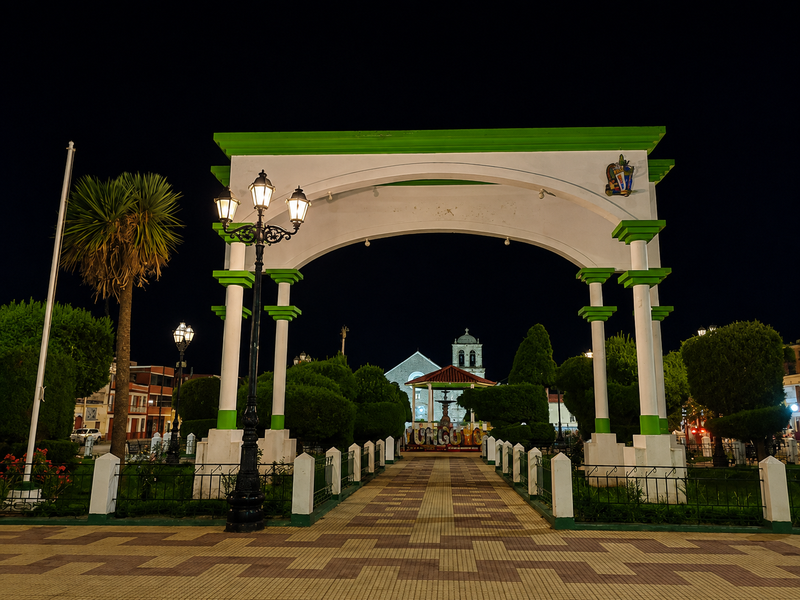
Yunguyo: More Than Just a Border Town
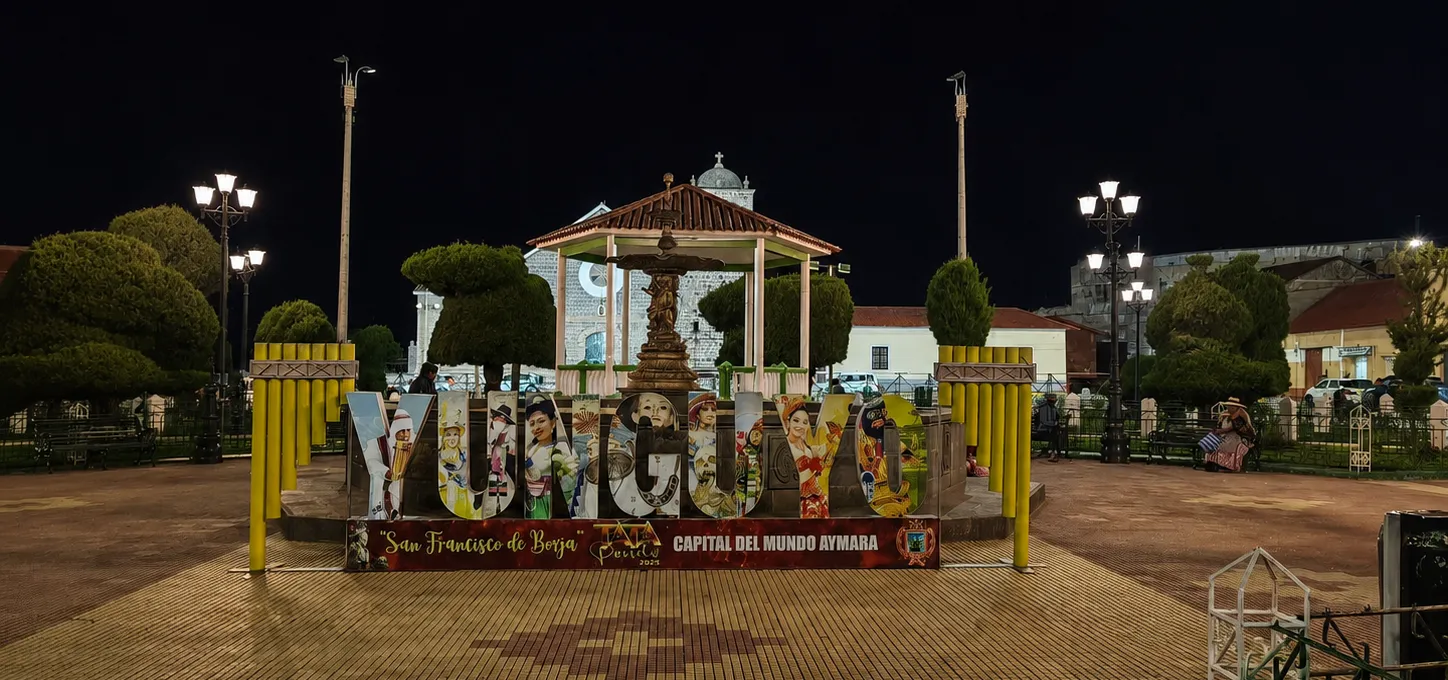
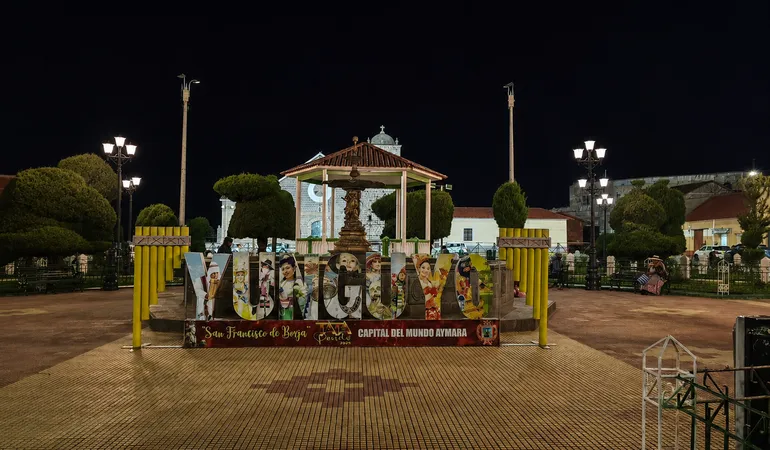
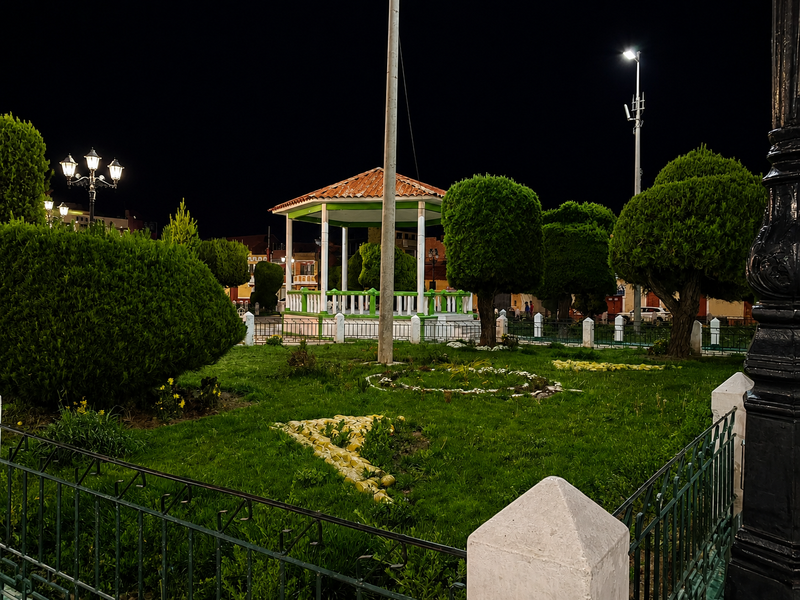
Yunguyo feels like a place suspended between two countries. The streets are filled with the chatter of Spanish, Quechua, and Aymara mixing together. Stalls sell everything from Andean textiles to energy drinks for the journey ahead.
But here's what most travelers don't know—and what I almost missed myself.
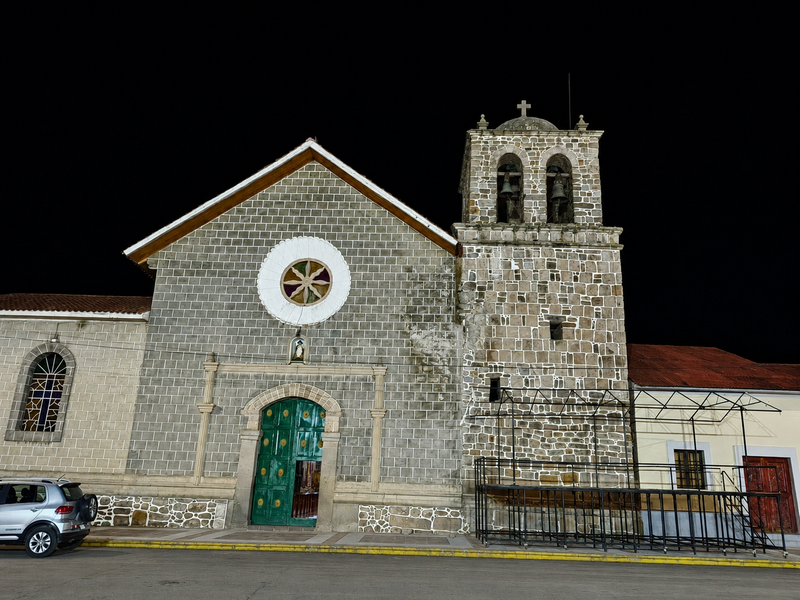
The Hidden Gem: Playa de Yunguyo (Yunguyo Beach)
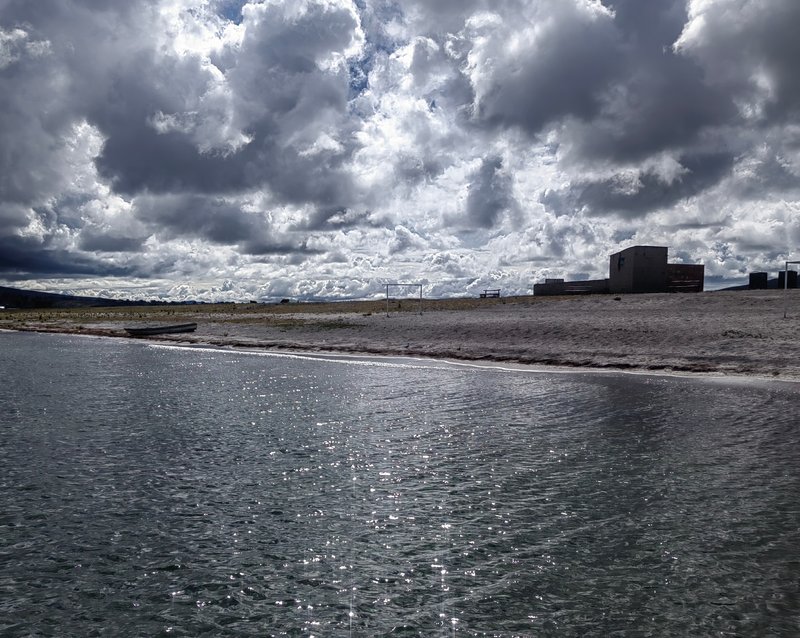
About 30 minutes from Yunguyo's main plaza lies a beautiful lakeside resort area simply called "La Playa de Yunguyo" (Yunguyo Beach).
This isn't your typical ocean beach—it's a stretch of shoreline along Lake Titicaca where the locals go to escape the weekend bustle. The area features:
- Calm, shallow waters perfect for a refreshing dip (brave the cold—it's invigorating!)
- Small restaurants serving fresh trout (trucha) straight from the lake
- Floating platforms and small docks where you can sit and watch the fishermen
- Stunning views of the lake and the Bolivian shoreline in the distance
- Peaceful atmosphere a world away from the border chaos
How to get there:
From Yunguyo's main plaza, you can take a mototaxi or colectivo for about 5-8 soles. The ride takes you through rural landscapes, past fields of quinoa and herds of sheep, until the lake suddenly opens up before you.
Why go:
If you arrive in Yunguyo early, or if you're breaking up your journey, spending a couple of hours at this beach is the perfect way to decompress before dealing with border formalities. I sat on the shore, watched the local kids splashing in the water, and ate the most incredible fried trout I've ever tasted—caught that morning, fried that afternoon.
Pro tip: The sun at this altitude is intense. Bring sunscreen even if it feels cool. And try the trucha a lo macho—trout in a spicy seafood sauce—if you find it on a menu.
From Yunguyo Plaza to the Border
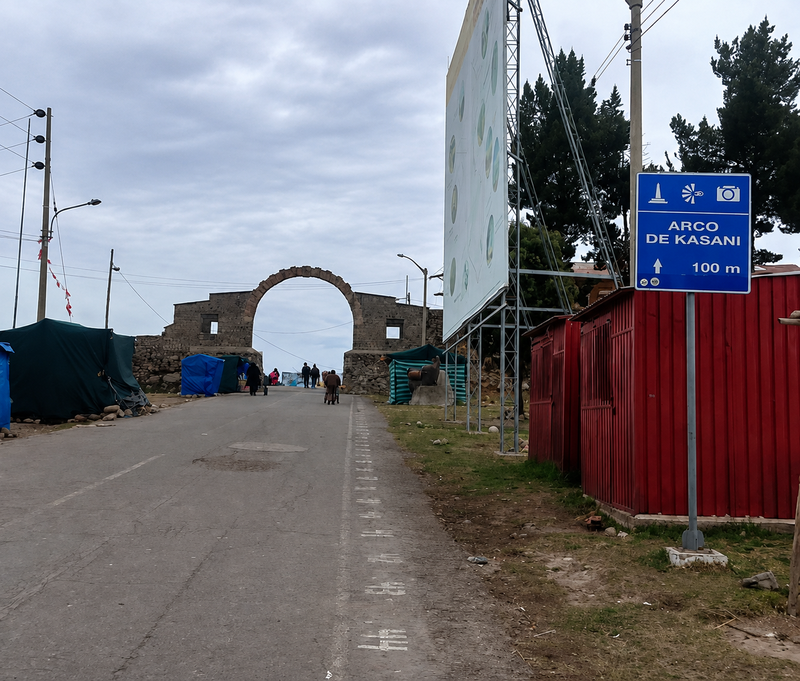
After your beach visit, return to Yunguyo's main square. From here, the Kasani border crossing is just a short ride away—about 10 to 15 minutes by taxi or local mototaxi.
The road leads you through a landscape of eucalyptus trees and agricultural fields until you spot the unmistakable signs of an international frontier: the archways, the flags, and the clusters of travelers with backpacks.
My #1 Recommendation: Change Money at Kasani
Here's the most practical advice I can give you from my own experience: do your currency exchange at Kasani, not before, and definitely not at the beach.
The money changers at this border crossing offer significantly better rates than banks or official exchange houses. In my case, I changed Peruvian Soles to Bolivian Bolivianos right there in the open air, with the friendly competition among changers working in my favor.
Why Kasani is better:
- Rates are typically higher than in town or at tourist spots
- You can negotiate, especially if you're changing a larger amount
- Having Bolivianos immediately is essential for taxis, snacks, and small purchases on the Bolivian side
- The street changers are a permanent fixture and generally trustworthy (just count your bills carefully)
Pro tip: The exchange rate for Soles is particularly good at this crossing. Some travelers report getting up to 3.5 Bolivianos per Sol through negotiation. For US dollars, bring crisp, new bills if you can—some changers are picky about condition.
Crossing the Border: Kasani - Step by Step
The Kasani crossing (also spelled Khasani) is known as one of the friendliest and least chaotic borders between Peru and Bolivia. Here's exactly how it works:
Step 1: Peruvian Exit (Migraciones)
The Peruvian immigration office is clearly marked. You'll need:
- Your passport (with at least 6 months validity)
- The entry stamp they gave you when you entered Peru (if applicable)
The process is straightforward: hand over your passport, they stamp your exit, and you're done. No forms to fill out in most cases.
Hours: Generally 8:00 AM to 6:00 PM, though this can vary. Aim to cross before noon to avoid the tour bus crowds that arrive mid-morning.
Step 2: Walk Across No-Man's Land
After Peruvian exit, you'll walk a short stretch—perhaps 100 meters—toward the Bolivian side. This is where the money changers have their little stands, and where you can feel the energy shift from Peruvian to Bolivian vibes.
Step 3: Bolivian Entry
On the Bolivian side, you'll find the immigration office (Migración) and, if needed, the customs office (Aduana).
For most nationalities (EU, UK, Canada, Australia, Brazil, etc.), entry is visa-free for tourism. You'll receive a stamp allowing you to stay for up to 30, 60, or 90 days depending on your nationality.
For US citizens: Note that Bolivia requires a visa (around $160 USD). It's highly recommended to arrange this in advance at a Bolivian consulate, though it's technically possible to process at the border with the right documents.
Important: The Bolivian side closes for lunch, typically from 1:00 PM to 2:00 PM (Bolivian time, which is one hour ahead of Peru). Don't get caught waiting!
Step 4: Find Your Ride to Copacabana
Once stamped in, you'll emerge onto the Bolivian side where collective taxis, minivans, and your waiting bus (if you took a direct service) will be ready to take you the final 10 minutes into Copacabana.
Practical Tips for Your Journey
| Category | Recommendation |
|---|---|
| Altitude | Puno (3,800m), Yunguyo (3,850m), Copacabana (3,800m). Take it easy, drink water, consider coca tea |
| Currency | Soles in Peru, Bolivianos (BOB) in Bolivia. Change at Kasani for best rates |
| Yunguyo Beach | 30 mins from Yunguyo plaza by mototaxi. Go early to avoid afternoon winds |
| Border Hours | 8:00 AM - 6:00 PM (closed 1-2 PM for lunch, Bolivian time) |
| Connectivity | WiFi in most hostels and cafes in Copacabana. Limited at the beach and on islands |
| Weather | Dry season (May-Oct): clear days, cold nights. Wet season (Nov-Apr): greener, possible afternoon rain |
| Time Zone | Bolivia is 1 hour ahead of Peru (GMT-4). Remember this for return travel! |
Final Thoughts: Why the Journey Matters
Starting in Puno, stopping at the hidden Playa de Yunguyo, crossing at Kasani, and arriving in Copacabana—this isn't just a route. It's a gradual immersion into the heart of the altiplano.
The Playa de Yunguyo taught me something important: the best travel experiences are often the ones you stumble upon, not the ones you plan. If I'd rushed straight to the border, I would have missed that peaceful hour by the lake, watching local life unfold at its own unhurried pace.
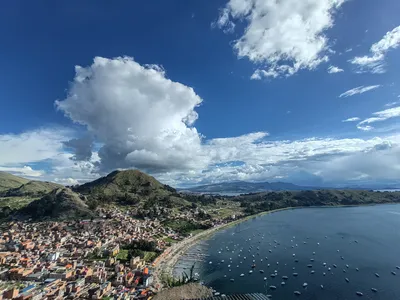
But the real reward awaits on the other side. Copacabana isn't just a border town—it's a destination in its own right, a sacred place where the lake meets the sky and the energy shifts from transit to tranquility. The white-washed basilica that watches over the town, the winding cobblestone streets that lead to hidden viewpoints, and the gentle lapping of Lake Titicaca against the shore create an atmosphere that begs you to slow down.
Take my advice: Don't rush this crossing. Stop at the beach in Yunguyo. Then, cross into Copacabana and give yourself time—a night or two at least. Climb the Calvario hill at sunset and watch the golden light paint the lake and the distant peaks of the Cordillera Real. Take the early morning boat to Isla del Sol, where Inca legends whisper in the wind and the trails lead you to forgotten temples. Sample the fresh trout from the lake, served simply with rice and potatoes, and sip on a cold Paceña beer as the evening settles over the plaza.
Copacabana has a way of capturing you. It's more than a gateway to Bolivia—it's a place that deserves a moment of your attention, a pause in your journey that will linger in your memory long after you've moved on.
Let the altitude slow you down and the lake views open you up. This sacred gateway to Bolivia holds secrets that only reveal themselves to those who stay a little longer, look a little closer, and let the journey unfold at its own pace.
Next chapter: Copacabana—where to stay, what to eat, and how to make the most of your time in this lakeside gem, plus the essential tips for continuing your journey to La Paz and beyond.